TD Synnex (previously Tech Data)
Three brands. One market. A race to the bottom.

About
TD Synnex (previously Tech Data)
Technology Distribution
Positioning
Alignment
Business Unit Manager & Marketing Lead. Responsible for portfolio strategy, vendor management, category positioning, pricing strategy, and go-to-market execution across multiple technology brands.
Reduced direct price competition between competing brands
Improved margin stability across the portfolio
Created clear differentiation between similar products
Enabled parallel growth of multiple vendor relationships
Established a scalable category management framework
Situation
When growth creates a different kind of problem
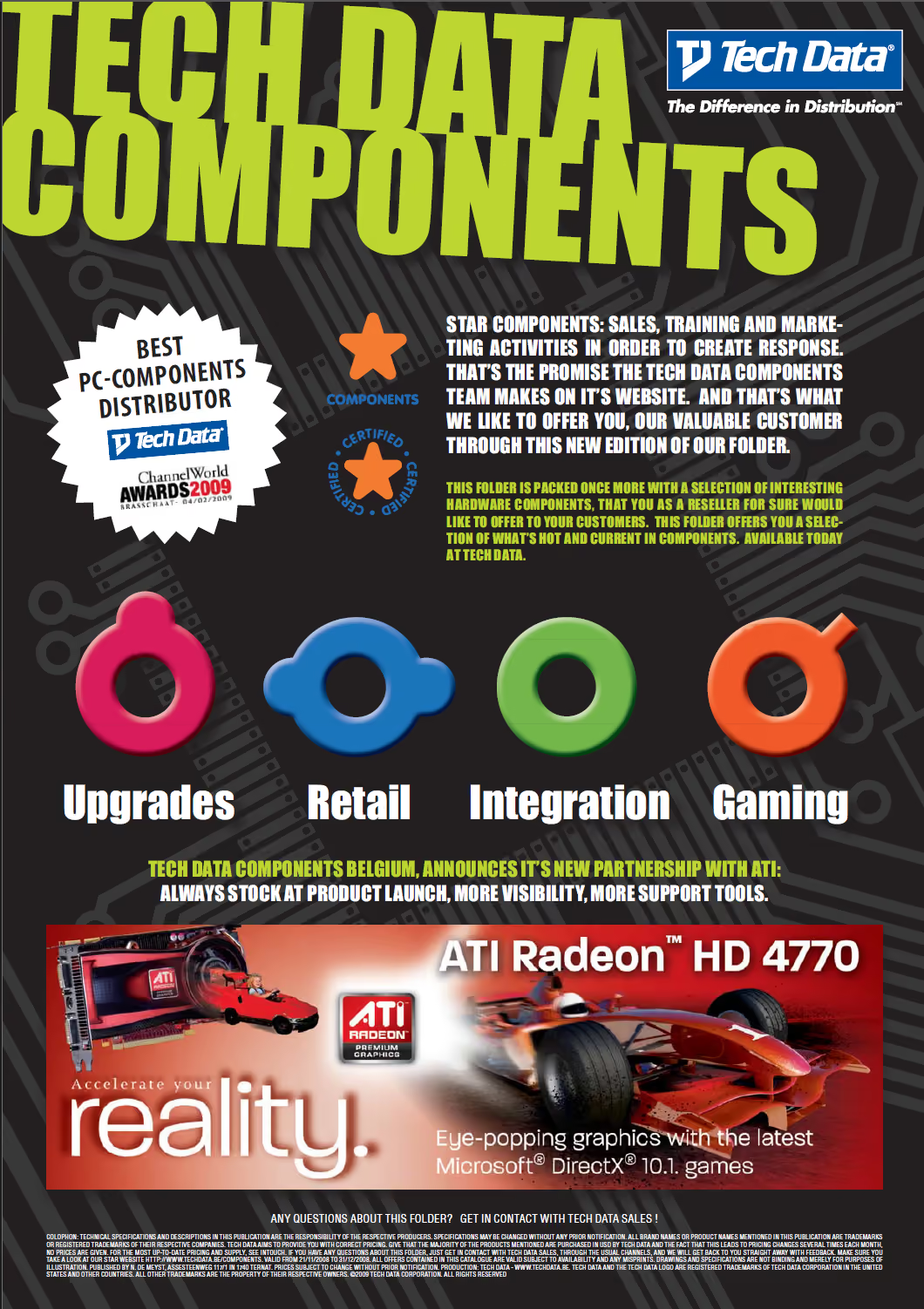
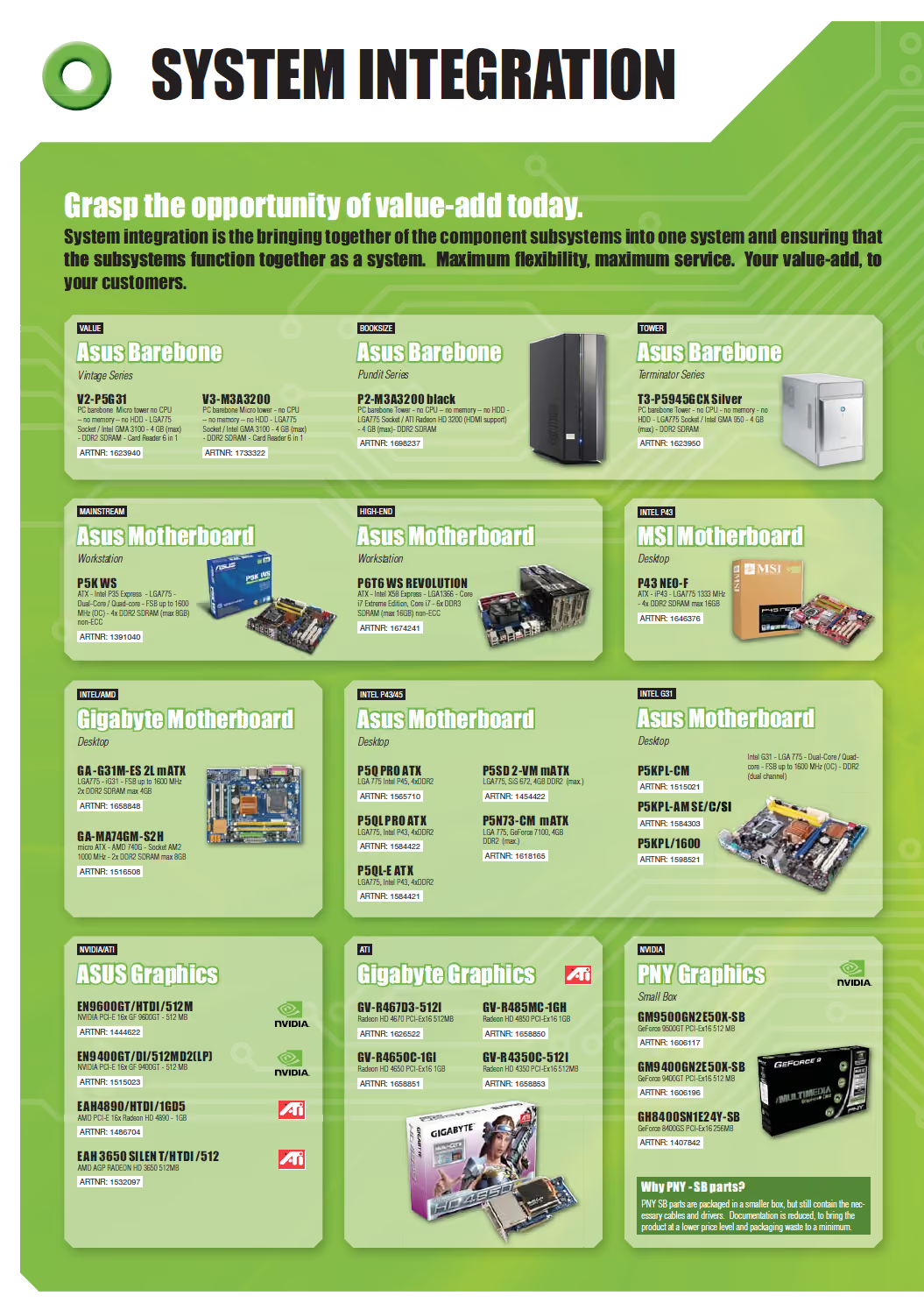
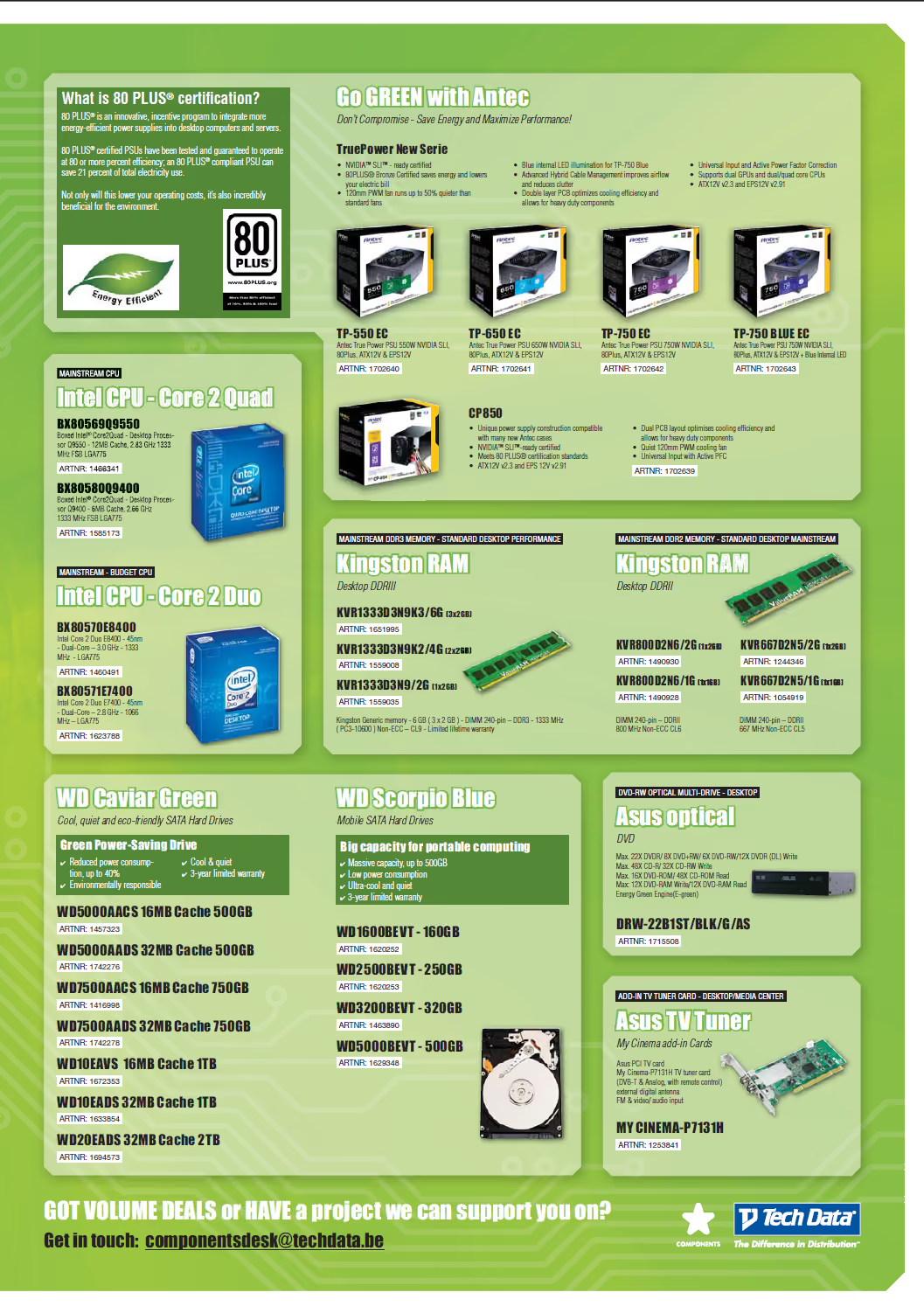
By the time the components business at distributor Tech Data had grown, the challenge was no longer simply how to add more vendors or increase volume. Growth had introduced a different problem: across categories such as memory and graphics, we were carrying several brands whose products were often technically similar, aimed at overlapping customer groups and competing for many of the same transactions.
On paper, that breadth created choice. Commercially, however, it could quickly become counterproductive. When several brands offer products with limited technical differentiation and there is no clear reason for a customer to choose one over another, price becomes the most obvious way to compete.
Why internal competition was putting pressure on margin
That dynamic is particularly dangerous in distribution because inventory already carries its own pricing risk. When market prices rise, stock purchased earlier can become more valuable and margins can improve. When prices fall, however, inventory bought yesterday suddenly has to compete with cheaper stock entering the market today.
If several brands inside the same portfolio are then discounting against each other as well, margin pressure begins to come from both directions. External market movements reduce pricing power, while internal competition makes it harder to protect what remains.
The issue therefore was not simply that we had accumulated too many products. The deeper problem was that too many products were being asked to compete for essentially the same reason.
Complexity increased with every additional SKU
The scale of the portfolio made that problem harder to manage. We were dealing with large numbers of SKUs, each with different stock levels, product lifecycles, vendor expectations and price movements. Some products were new and supply-constrained, while others were approaching end of life. Some vendors were focused primarily on volume, while others expected stronger premium positioning.
Managing each product or vendor independently did not solve the underlying issue. Without a clearer commercial structure, the portfolio risked becoming increasingly difficult to manage as it grew, with additional breadth creating more overlap rather than more meaningful choice.
That led to a more fundamental question about the portfolio: what role should each brand and product actually play?
Starting with how customers buy
Instead of organising the category primarily around vendor names, I began looking at how customers themselves approached the market. Their needs were not identical, even when the underlying technology appeared similar.
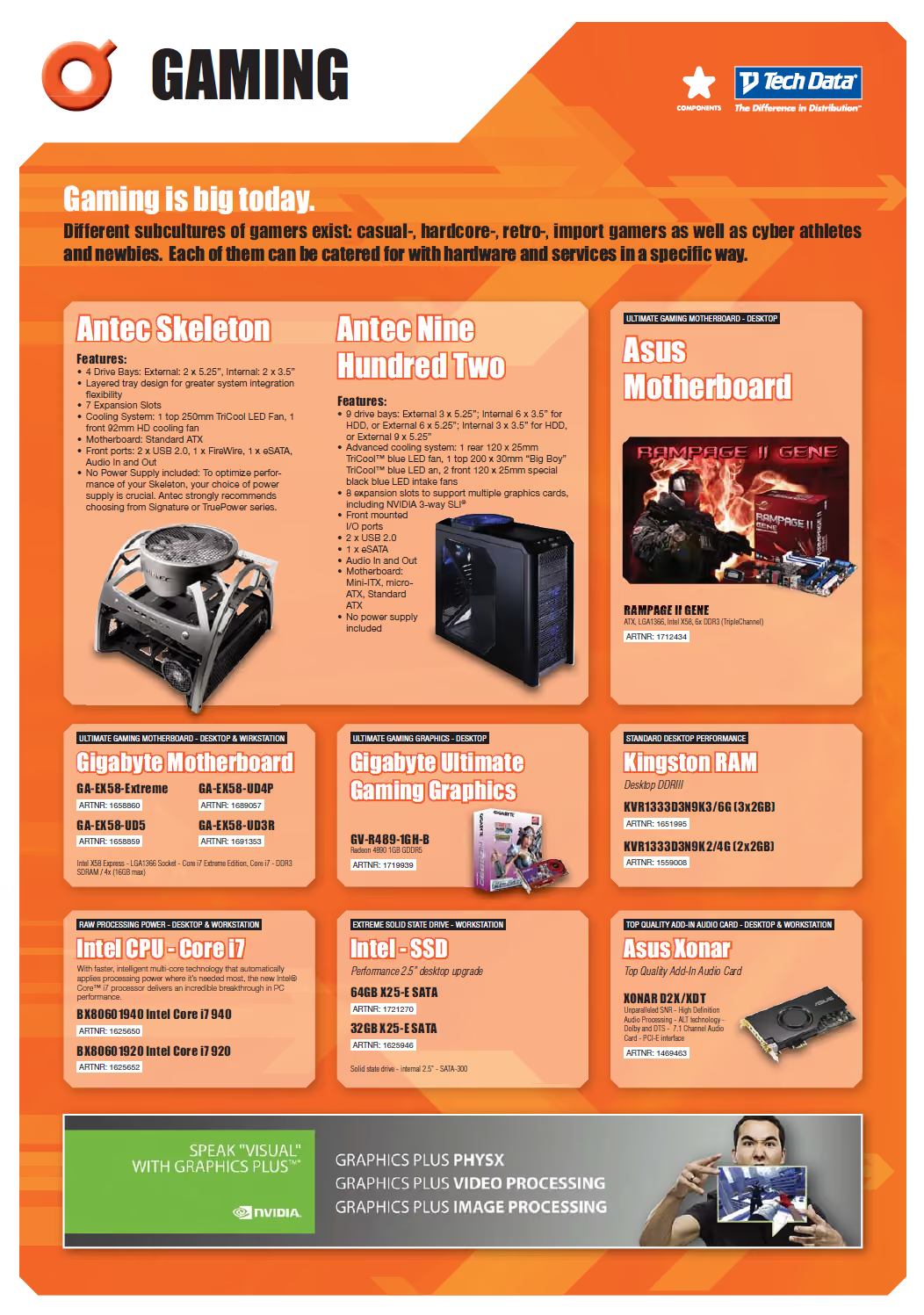
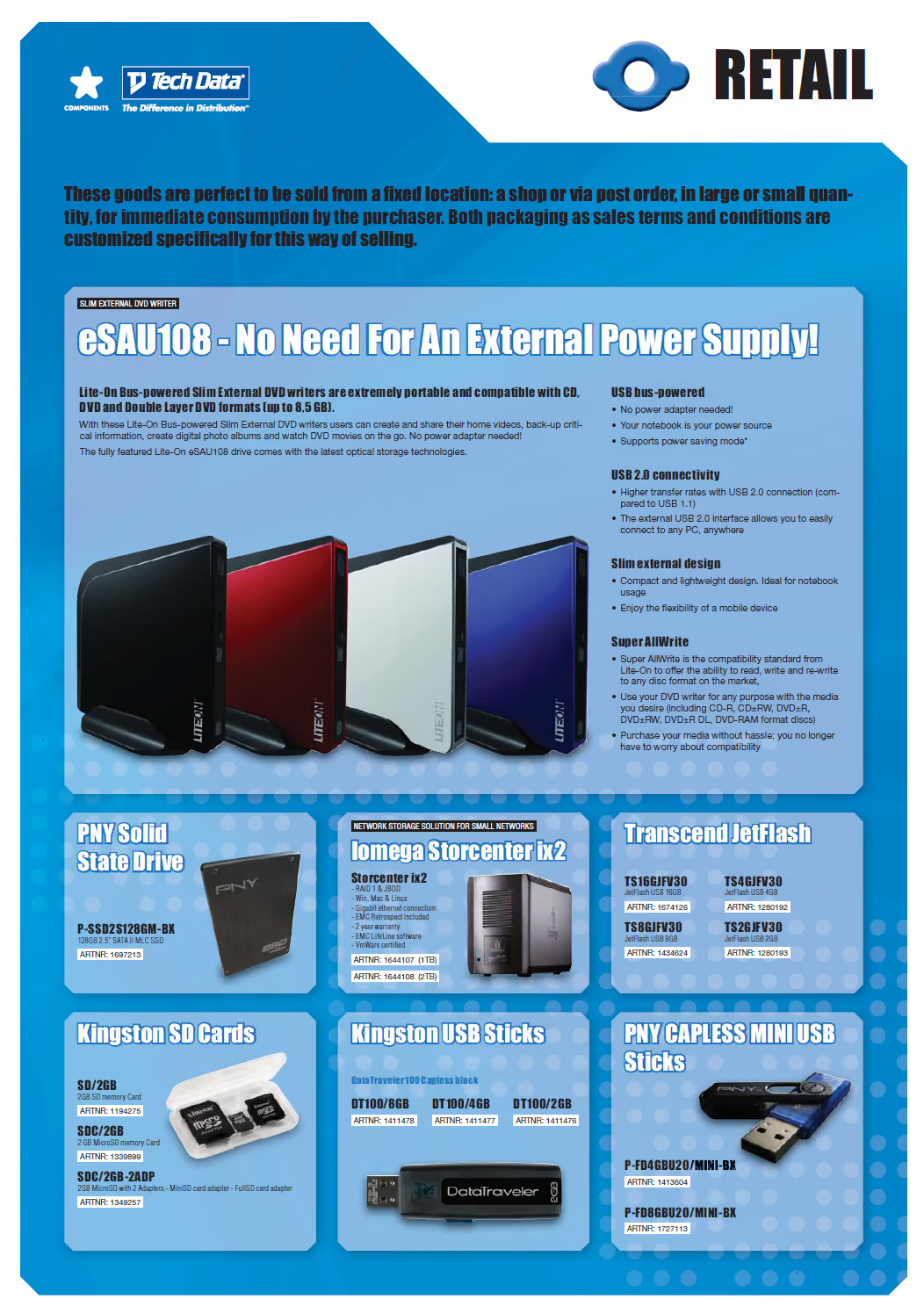
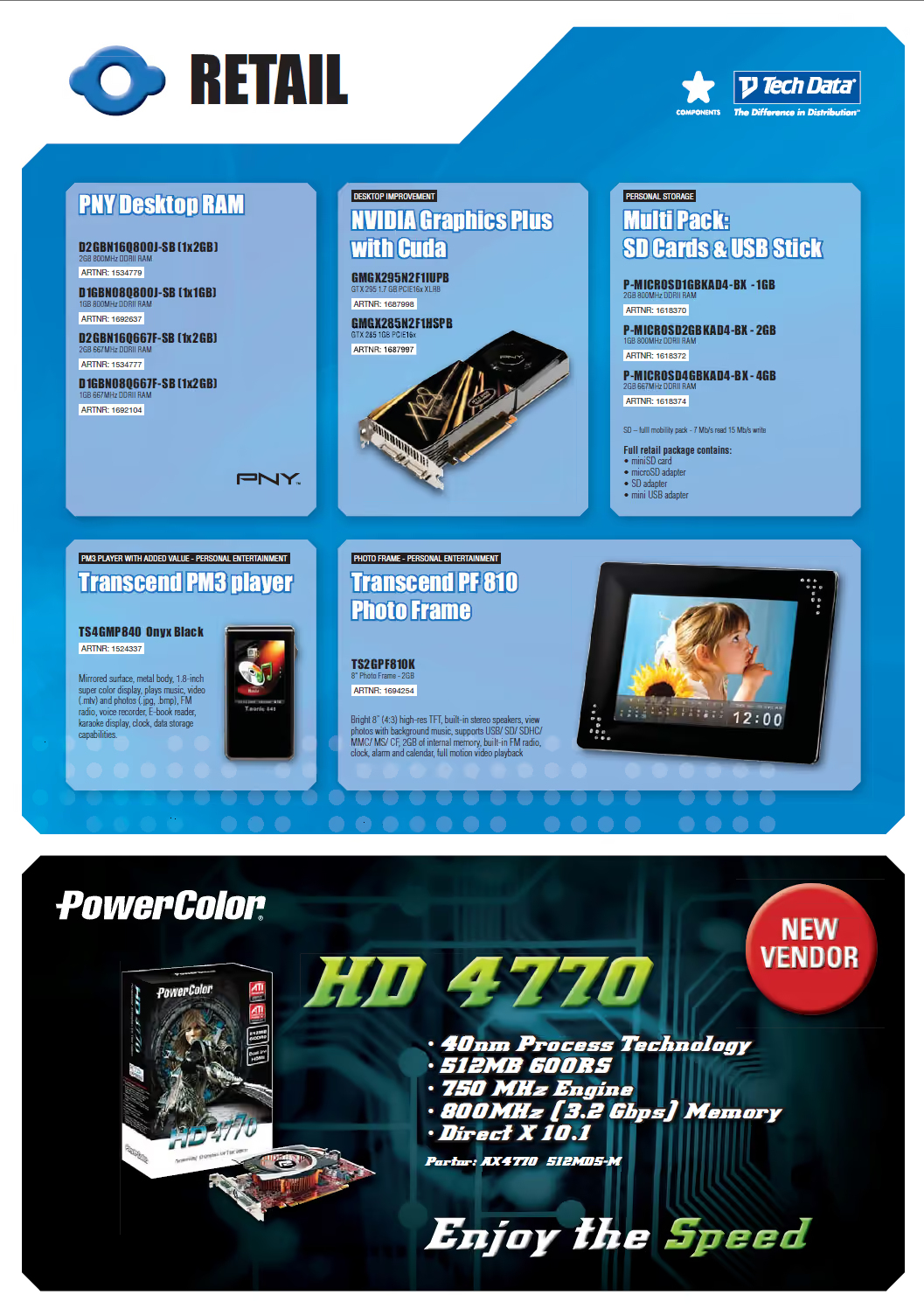
Some customers were looking for high-end gaming performance, while others were upgrading an existing system and cared more about compatibility and value. Retail introduced another set of pricing, packaging and merchandising dynamics, and there was always a budget segment in which cost carried much greater weight than brand or performance.
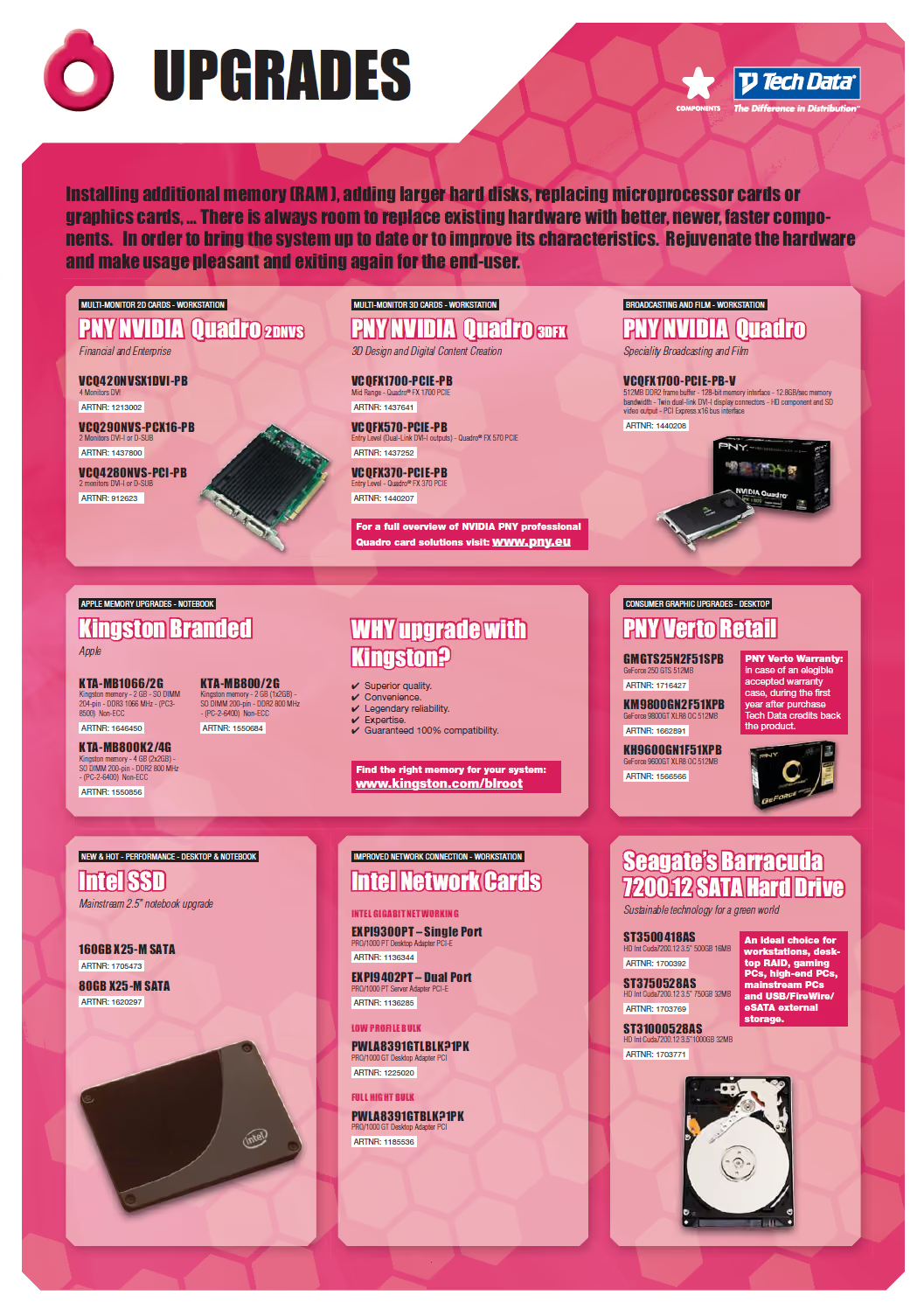
Those differences suggested a more useful way to structure the business. Rather than allowing every brand to compete across the same commercial space, the portfolio could be divided into clearer subcategories such as high-end gaming, upgrading, retail and budget, with brands and products positioned deliberately within them.
Giving every part of the portfolio a commercial role
Once those roles became clearer, products that had previously appeared interchangeable began to make more sense in context. Sales teams had a stronger reason for recommending one option over another, because the choice could be linked to a particular customer need rather than simply to availability or price.
Customers were also presented with a more understandable buying logic. Vendors could grow within a more clearly defined part of the market instead of automatically cannibalising one another, while pricing became easier to manage because fewer products were being forced into direct comparison.
The important change was not a reduction in portfolio breadth. It was the introduction of enough structure to make that breadth commercially useful.
From product collection to portfolio system
The portfolio had previously been managed largely as a collection of products and vendor relationships. The stronger approach was to manage it as a system of distinct commercial roles, with each part of the range contributing differently to the overall business.
That distinction created clearer positioning and made the portfolio easier to scale without continuously increasing internal competition. It also provided a more robust basis for margin management, because differentiation no longer depended primarily on price.
The broader lesson has remained relevant in later roles as well. Complexity is not necessarily a problem in itself, but unmanaged overlap usually is. Whether the subject is products, services, customer segments or go-to-market motions, scale becomes much easier to manage when each part of the system has a clear role and a clear reason to exist.
Shift
- Reframed the problem from “brand competition” to “category structure”
- Introduced four distinct subcategories: high-end gaming, upgrade, retail, and budget
- Positioned each brand within a specific category instead of letting them overlap
- Aligned pricing logic and market expectations per category
- Used SKU-level data (via SAP) to monitor and adjust positioning in real time
Clarity Engine Alignment assessment
Results
- Reduced direct price competition between similar products
- Stabilized pricing across the portfolio
- Increased margin predictability despite market fluctuations
- Enabled multiple brands to grow simultaneously without cannibalization
- Created a clearer buying logic for resellers and customer

Defining moment
The realization hit when three nearly identical products were fighting on price alone.
Nothing differentiated them except timing and discounting.
By introducing categories, the same products suddenly had context and purpose.
They stopped competing and started coexisting.

Client feedback
Testimonial






Start with diagnose
Answer 5 questions. See where your commercial system is losing clarity.
A short diagnostic built on the Alignment Matrix. It points to where friction is most likely sitting — not a definitive answer.