Kantar
Kantar’s SaaS business was growing. The commercial system had to catch up.

About
Kantar
Market Research & Consulting
Scaling
Execution
Global Sales Enablement & GTM Transformation Consultant
30% annual revenue growth, 200 sales professionals engaged globally, improved funnel visibility, and platform revenues surpassing $100M.
Situation
When the product model changes faster than the sales model
Kantar was expanding its SaaS platform business inside an organisation with deep roots in research and consulting. That created a commercial tension because the product model was evolving more quickly than the sales system surrounding it. The organisation had strong market credibility, experienced commercial teams and established customer relationships, but many of the habits that worked well in a consulting environment were not designed for the repeatability required by a scaling SaaS business.
Consultative selling can rely heavily on expertise, relationships and the ability to shape an engagement around an individual client. SaaS introduces a different set of requirements alongside those strengths, including clearer target segments, more consistent pipeline visibility, stronger CRM discipline and sales motions that can be repeated across teams and markets. The objective was therefore not to replace Kantar's consultative capabilities, but to build enough structure around them for the platform business to scale.
Creating consistency across a global sales organisation
The challenge became more visible across regions. Pipeline visibility varied between markets, CRM adoption was inconsistent, and sales teams operated with different levels of structure, enablement and process discipline. Strong individual sellers could still perform well, but too much of the commercial motion depended on local habits and personal experience.
That variation becomes increasingly difficult to sustain as a SaaS business grows. Management needs to understand where opportunities are developing, sales teams need a shared view of how accounts should be prioritised and progressed, and the organisation needs enough consistency to distinguish between isolated success and a commercial approach that can be reproduced. Without that visibility, growth becomes harder to manage even when demand for the underlying platform remains strong.

Building a more repeatable go-to-market motion
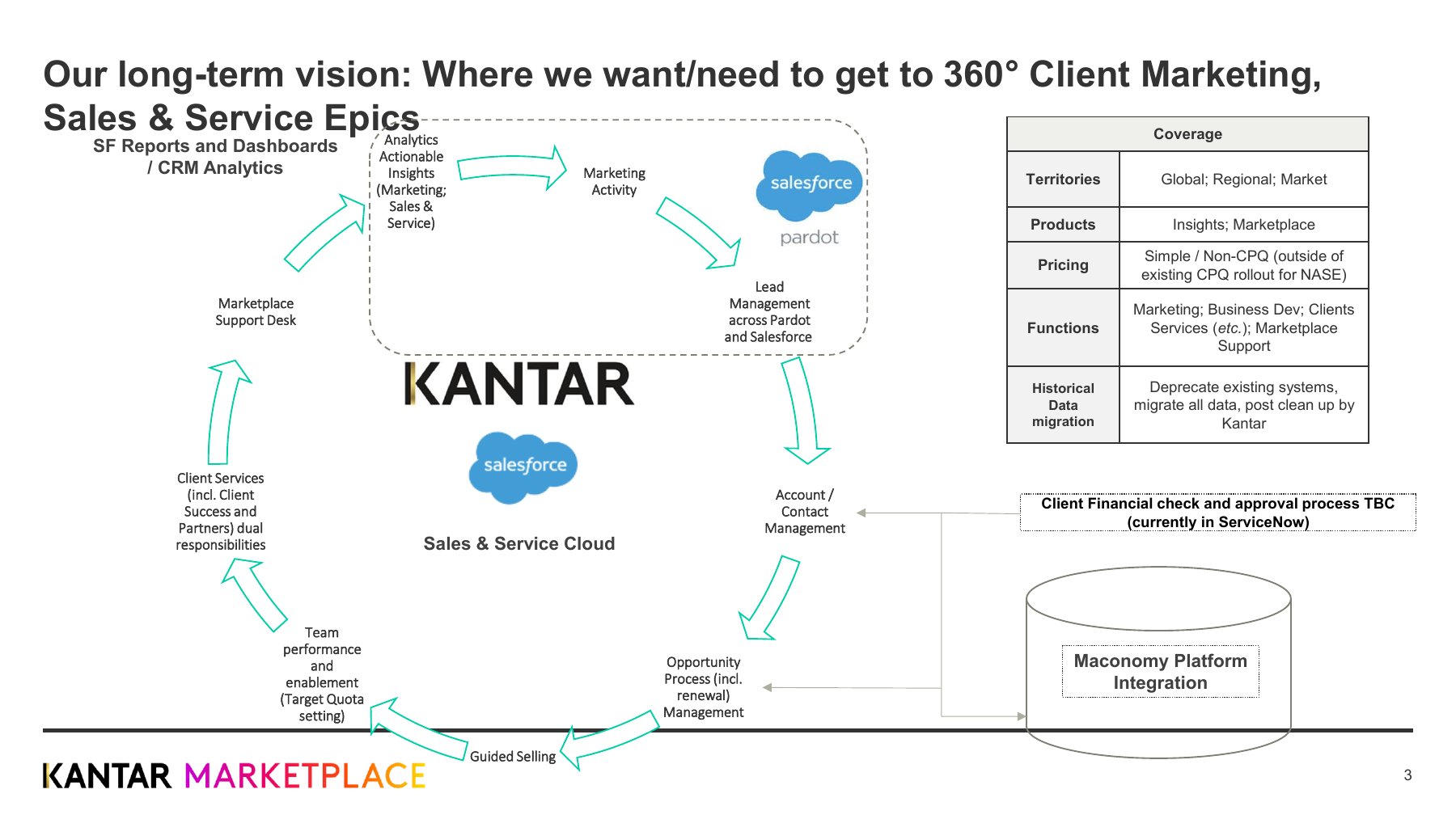
The work focused on creating greater consistency around the commercial system rather than imposing a rigid sales methodology. Target industries and accounts were prioritised more deliberately, value propositions and outreach approaches were refined, and funnel reporting provided greater visibility into how opportunities progressed through the business. CRM adoption and Salesforce scoping were part of the same effort because reliable commercial governance depends on the quality and consistency of the information entering the system.
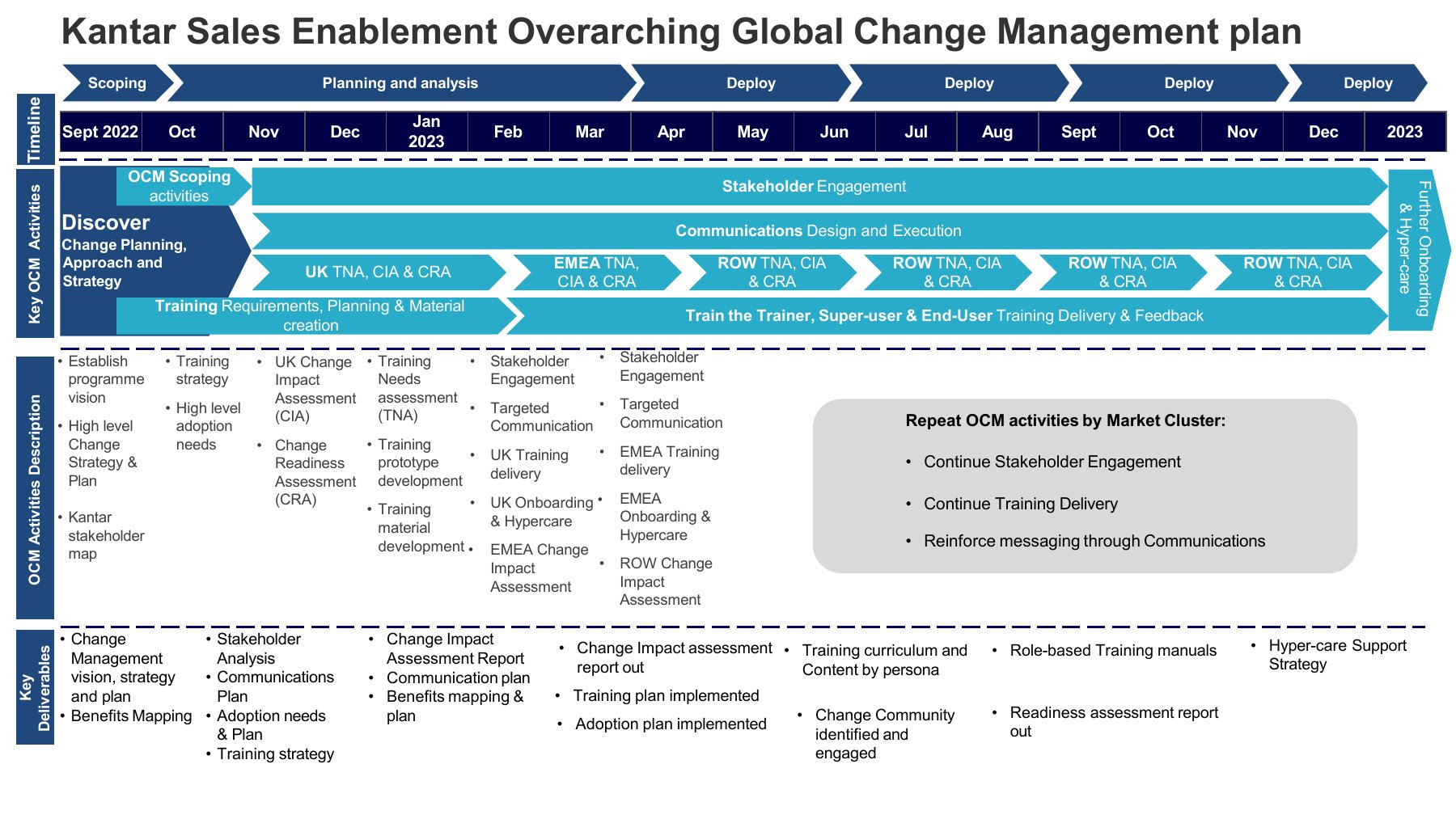
Sales enablement provided another important layer. Principles drawn from Winning by Design helped introduce a more structured SaaS-oriented approach, but frameworks alone were never going to change behaviour across a global organisation. The practical challenge was translating those principles into ways of working that salespeople in different countries, with different backgrounds and levels of experience, could actually use.
Making adoption part of the transformation
With approximately 200 sales professionals involved globally, introducing new processes through training materials or presentations would have had limited impact by itself. The commercial logic needed to become visible enough for people to engage with it, while still giving teams a reason to participate beyond simply complying with another corporate initiative.
The Kantar World Cup became one way of addressing that challenge. What began as a relatively simple sales competition developed into a shared commercial programme that connected teams across countries, encouraged best-practice sharing and gave the wider transformation much greater visibility. Rather than treating engagement as something separate from process change, the initiative helped make adoption part of the change itself.
From individual practice to a shared commercial rhythm
As the different elements came together, the platform business developed a more consistent operating rhythm around account prioritisation, opportunity management, CRM usage, funnel governance and sales enablement. Local expertise and consultative selling remained important, but they increasingly operated within a common commercial framework that provided management with better visibility and sales teams with clearer ways of working.
That distinction mattered because scaling does not require every salesperson or market to behave identically. It requires enough shared structure for the organisation to understand what is working, reproduce successful practices and intervene when performance starts to diverge. The objective was therefore consistency where consistency created leverage, without removing the judgement and customer understanding that had made Kantar successful in the first place.
Scaling the commercial system alongside the platform
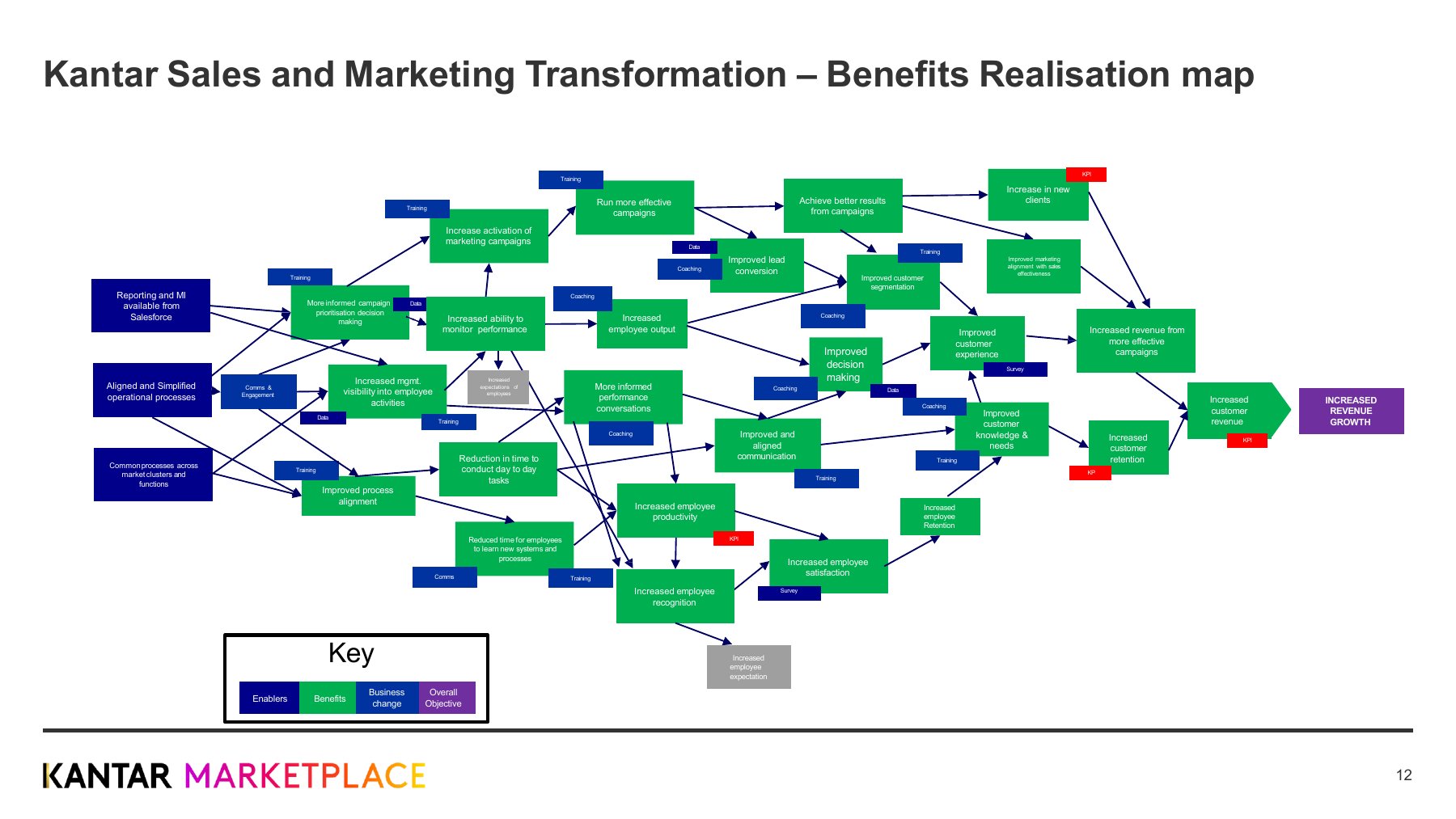
During this period, the platform business achieved approximately 30% annual growth, revenues moved beyond $100 million, and around 200 sales professionals participated in the global enablement effort. The organisation also gained stronger visibility into pipeline performance and broader adoption of SaaS-oriented selling practices across markets.
Those numbers matter, but the more durable change was the commercial infrastructure developing around the growth. Kantar was no longer relying only on strong people and a strong platform to produce results. The business was building a system capable of supporting that growth across multiple markets, teams and customer relationships.
Preserving what works while changing what needs to scale
The experience reinforced an important principle about commercial transformation. Organisations rarely need to discard everything that made them successful simply because their business model is evolving. Kantar's consultative heritage remained an advantage because customer understanding, expertise and relationships continued to matter.
The challenge was to add the disciplines that a SaaS model required without losing those strengths. Better targeting, stronger pipeline governance, consistent CRM usage and scalable enablement created the repeatability the platform business needed, while the underlying consultative capabilities remained part of how Kantar created value for customers.
The result was not a move from one sales model to another. It was the development of a commercial system capable of combining both.

Shift
- Prioritized target industries and accounts
- Refined value propositions and outreach approaches
- Introduced funnel reporting and performance governance
- Delivered sales enablement based on Winning by Design principles
- Launched global engagement initiatives to drive adoption
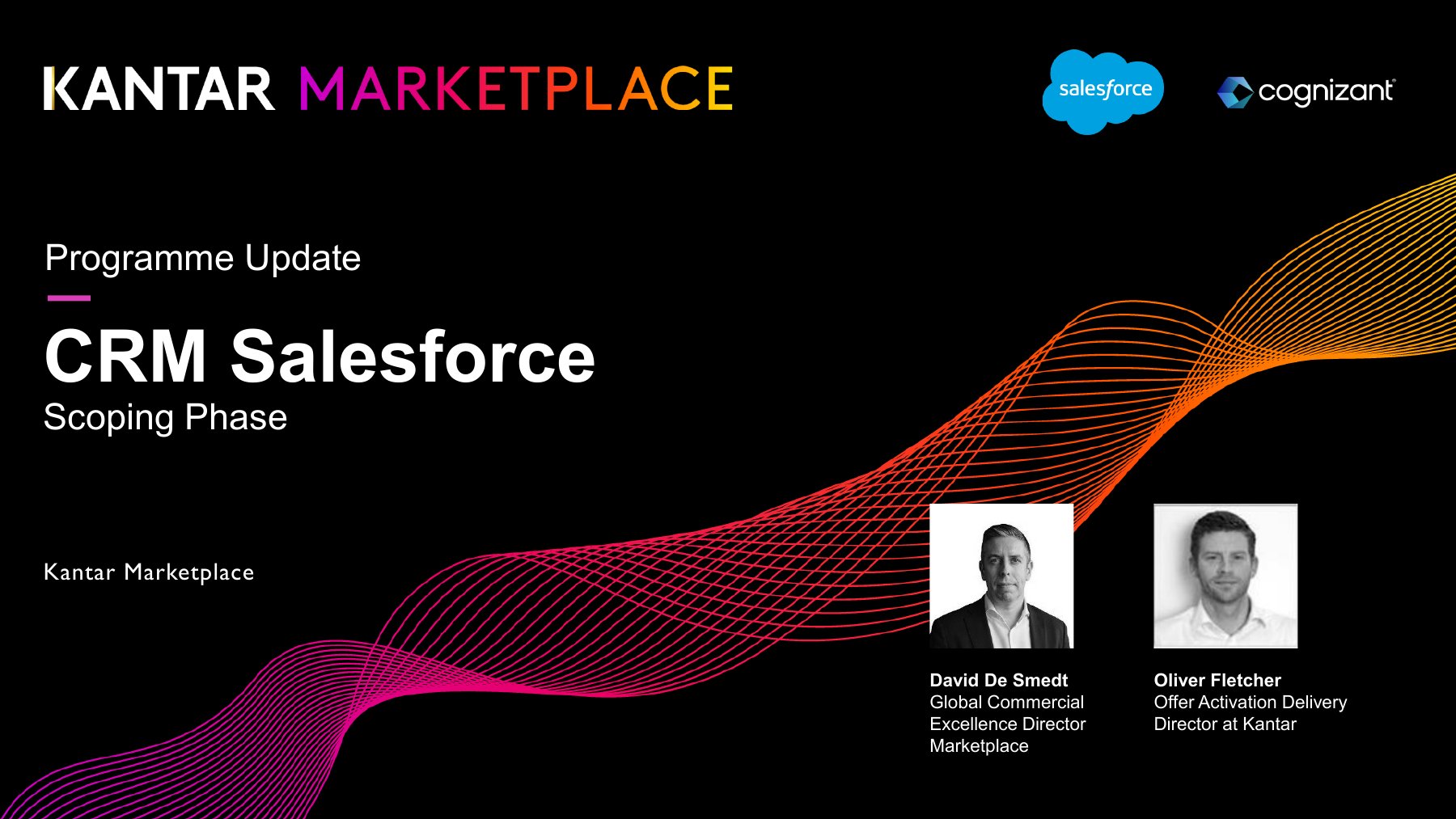
- Supported CRM transformation and Salesforce scoping activities
Clarity Engine Alignment assessment
Results
- 30% annual growth achieved
- Platform revenues exceeded $100M
- 200 sales professionals actively participated in enablement programs
- Improved global visibility into pipeline performance
- Increased adoption of scalable SaaS selling practices

Defining moment
To improve adoption without large budgets or dedicated resources, we launched the "Kantar World Cup," a global sales competition that brought together teams from multiple countries. What began as a simple gamification initiative evolved into a highly visible enablement program that united sales teams, encouraged best-practice sharing, and accelerated adoption of new commercial processes across the organization.

Client feedback
Testimonial




insights
Related
insights



Start with diagnose
Answer 6 questions. See where your commercial system is losing clarity.losing clarity.
A short diagnostic built on the Alignment Matrix. It points to where friction is most likely sitting — not a definitive answer.