GIGA-BYTE (via TD Synnex)
One competitor conversation opened the door to Taiwan

About
GIGA-BYTE (via TD Synnex)
Positioning
Scaling
Owned category and vendor strategy, driving Gigabyte onboarding and establishing direct access to Taiwan’s tech ecosystem via TAITRA.
Expanded vendor portfolio with high-demand brands and gained direct access to Taiwan’s manufacturing ecosystem through TAITRA, unlocking long-term supply and partnership advantages.
Situation
When demand is visible before the opportunity is fully understood
By the time I was building the components business at distributor Tech Data, I had already learned that category growth did not come only from selling harder. It also depended on recognising opportunities early enough to act on them before they became obvious to the rest of the market.
As ASUS began gaining traction, another signal kept appearing in customer conversations: demand for Gigabyte was increasing. At first, it would have been easy to treat that as another request to add a vendor, but the pattern became stronger as we looked more closely. Competitors were already carrying the brand, specialist media were rating its products highly, and the combination of technical performance and pricing made it clearly relevant to the same customer base we were already serving.
The demand was therefore not the difficult part to establish. The more interesting question was why we had not been better positioned to recognise and act on that opportunity earlier.
Realising how far downstream we were operating
That question became increasingly important as the components business developed. We were operating as a distributor in Belgium, but many of the decisions shaping our commercial reality were being made much further upstream by manufacturers in Taiwan, chipset vendors, regional organisations and the teams controlling supply, allocation and product launches.
Remaining too far downstream meant that we were often responding after the commercial conditions had already been set. Products became visible locally after competitors had listed them, shortages became apparent after allocation decisions had already been made, and pricing pressure emerged after others had secured better terms or stronger access.
The issue was therefore larger than demand generation. Our ability to grow was partly determined by how close we were to the people and organisations making the decisions that shaped the category before those decisions reached the local market.
Turning Gigabyte from a signal into a relationship
Gigabyte became one of the clearest examples of that dynamic. Once the strength of the market signal became apparent, we approached the company, developed the relationship and ultimately signed a distribution agreement.
That was commercially important in its own right, but the more significant lesson came from understanding what had allowed the opportunity to become visible. Adding another strong brand improved the portfolio, yet it also highlighted how much more effective we could be if we built relationships closer to the source rather than waiting for opportunities to arrive through local channels.
The question gradually shifted from which vendor we should add next to how we could improve our access to the wider ecosystem shaping the market.
Discovering a route into the manufacturing ecosystem
A relatively informal conversation provided the next step. At an Intel distributor event, I met someone from the industry who mentioned that he travelled regularly to Taiwan. His business operated at a much smaller scale than Tech Data, yet he had direct access to the ecosystem where many of the products we were distributing were being designed, launched and negotiated.
That contrast was difficult to ignore. If a smaller market participant could establish those relationships directly, there was no obvious reason why we should remain dependent on a more distant view of the same market.
The conversation led me to TAITRA, Taiwan's external trade development organisation, and shortly afterwards to an invitation to Computex. That access materially changed the way I viewed the category.
Moving from local visibility to market proximity
Once we began operating closer to the source, the commercial environment looked different. Instead of understanding the market mainly through European price lists, local vendor contacts and products that had already entered distribution, we could start building relationships closer to the manufacturers themselves.
That improved several things at once. Product developments became visible earlier, commercial conversations could happen more directly, and the context around supply, pricing and future launches became easier to understand. The value was not simply better information, but the ability to act while that information was still commercially useful.
Proximity also improved the quality of decision-making. When the organisation understood where manufacturers were investing, which products were gaining strategic importance and how supply might develop, portfolio decisions could be made with more confidence than if they were based only on local demand after the fact.
Making ecosystem access part of the commercial advantage
The Gigabyte relationship therefore became about more than adding another successful vendor to the portfolio. It exposed a broader weakness in the way the category had been managed and showed how direct access to the manufacturing ecosystem could become a source of competitive advantage.
The closer we moved towards the people making product, pricing and allocation decisions, the less dependent we became on reacting to information that competitors could see at the same time. Better access created earlier signals, stronger relationships and more room to shape commercial outcomes before they reached the local market.
That did not remove the importance of local execution. Sales, pricing, inventory management and customer relationships still determined whether opportunities converted into revenue. What changed was the quality and timing of the information available to support those decisions.
From adding brands to shaping the category
Looking back, Gigabyte marked an important shift in how I thought about category development. A distributor can compete by carrying more products, but that alone does not create a durable advantage if every competitor has access to the same information, suppliers and commercial conditions.
A stronger position comes from understanding the ecosystem well enough to see change earlier and from building relationships close enough to the source to influence how those opportunities develop.
The Gigabyte opportunity began as evidence of customer demand. Its greater value was showing that proximity to the ecosystem could become a commercial asset in its own right.
Shift
- Identified missed revenue through competitor supply analysis
- Validated brand potential through international specialist media
- Proactively initiated vendor relationship with Gigabyte
- Leveraged industry events to build informal intelligence networks
- Discovered and activated TAITRA as a gateway to Taiwan’s ecosystem
Clarity Engine Alignment assessment
Results
- Signed distribution agreement with Gigabyte
- Strengthened category positioning with high-demand brands
- Gained direct exposure to Taiwan’s vendor ecosystem
- Established early access to innovation and supply networks
- Created a repeatable approach to identifying and unlocking vendor opportunities

Defining moment
During an Intel distributor event, surrounded by competitors, a casual conversation changed perspective.
A smaller reseller mentioned frequent trips to Taiwan. That raised a simple but sharp question: how could they access something a larger distributor couldn’t?
That moment led to discovering TAITRA. Within weeks, contact was established, resulting in an invitation to Taiwan during Computex — opening the door to direct relationships with the ecosystem behind the products.

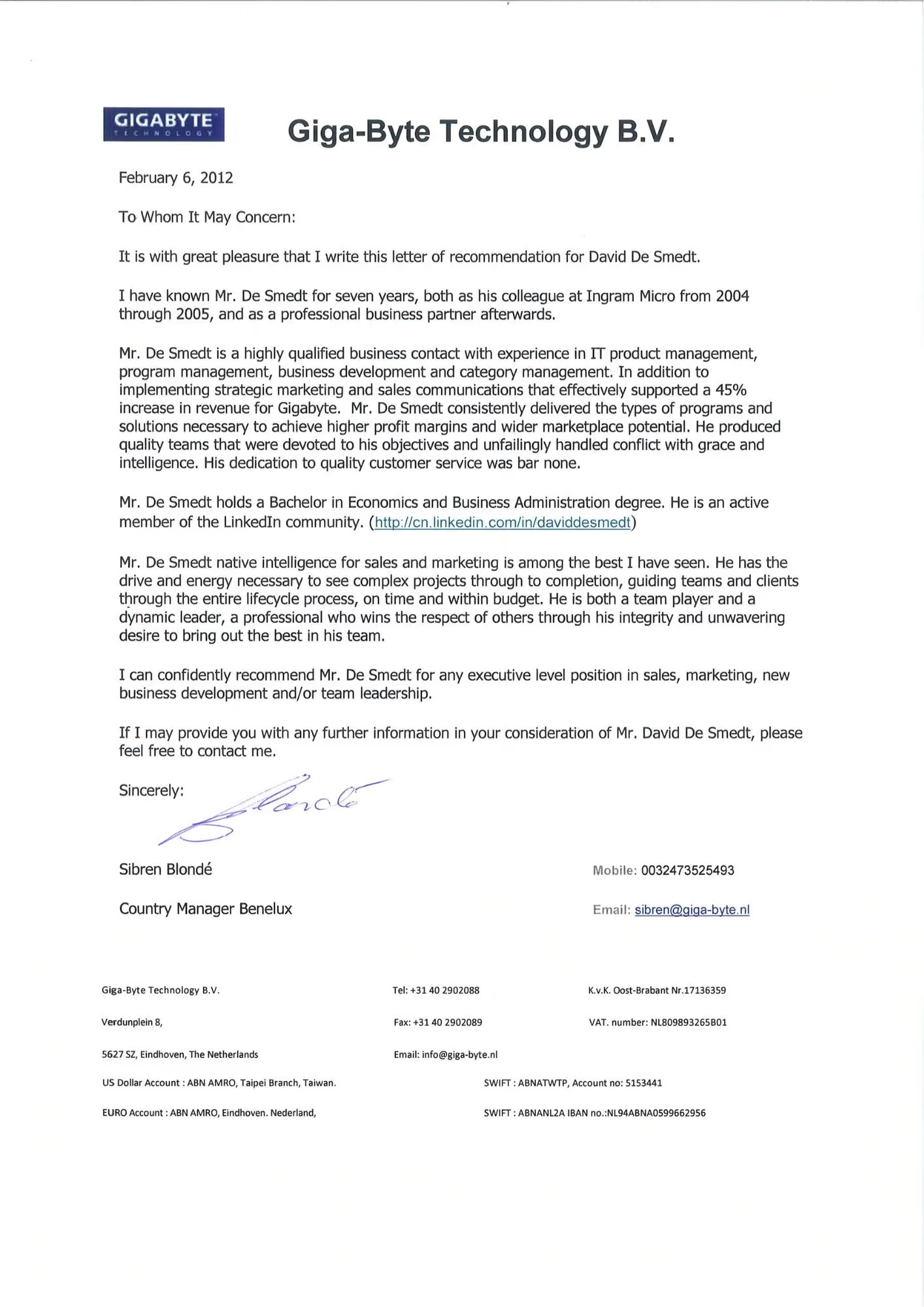
Client feedback
Testimonial




insights
Related
insights



Start with diagnose
Answer 6 questions. See where your commercial system is losing clarity.losing clarity.
A short diagnostic built on the Alignment Matrix. It points to where friction is most likely sitting — not a definitive answer.