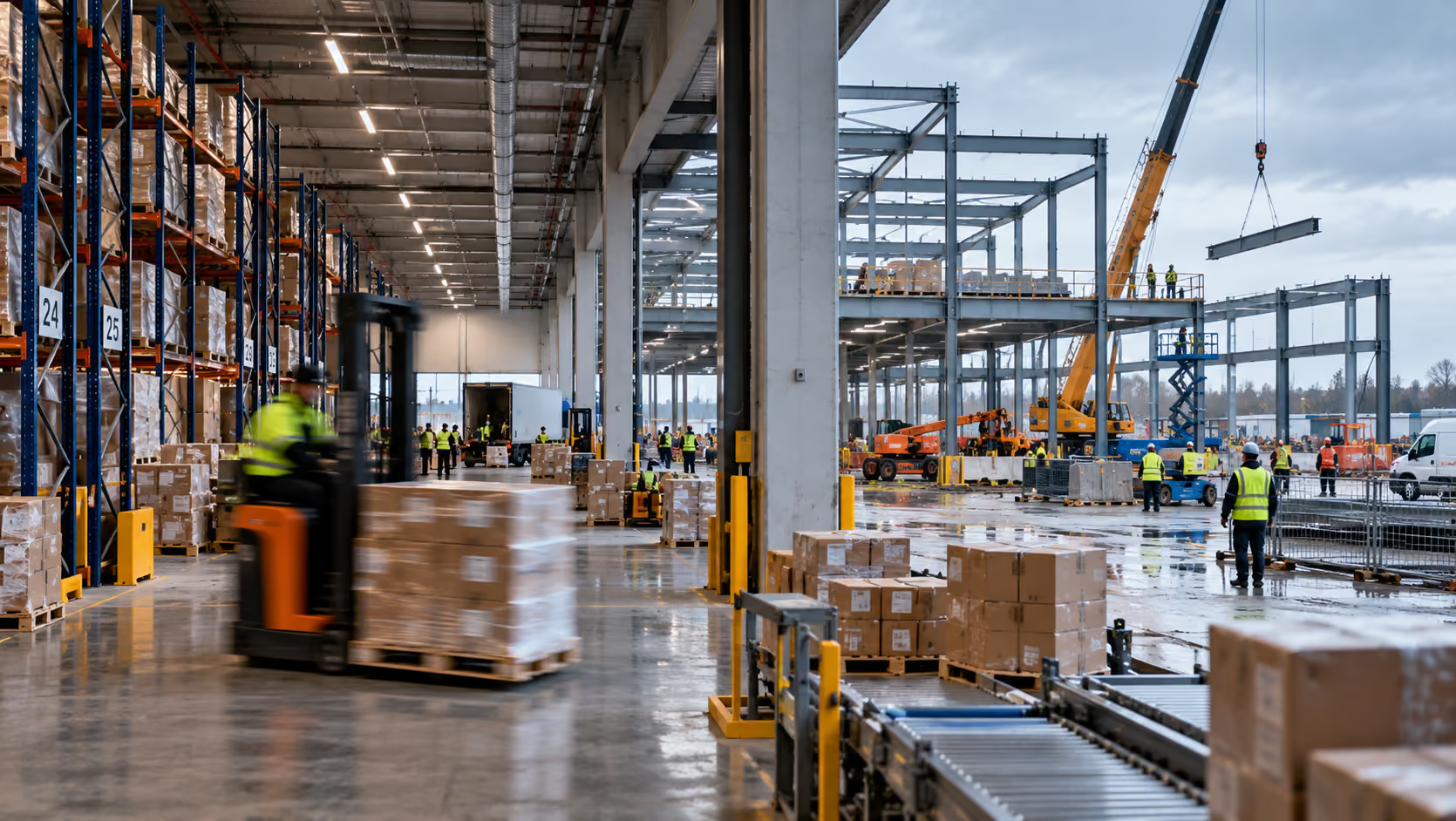
Most growth plans assume stability. Clear scope. Fixed priorities. Predictable execution. That’s not how growth actually happens.
When companies design growth systems, they imagine a controlled environment:
So they build systems optimized for efficiency under those conditions.
And those systems work.
Right up until reality changes.
Growth rarely happens in a straight line.
The moment growth accelerates, stability disappears.
And systems built for stability start to break:
Not because the system was wrong.
But because it was too rigid.
At AXI, the initial plan was straightforward:
Build an inbound engine.
Estimated timeline: nine months.
What followed was anything but stable:
The environment didn’t wait for the system to be ready.
The system had to evolve while everything else was moving.
And that changed the nature of the work entirely.
This is where most organizations get it wrong.
They design systems for:
But growth introduces:
So the system becomes the bottleneck.
Not because it’s poorly designed.
But because it’s designed for the wrong conditions.
A growth system should not be optimized for stability.
It should be designed for movement.
That means:
Because change is not the exception.
It’s the environment.
A growth system is not defined by how well it works under control.
It’s defined by how well it holds under change.
AXI Case Study
I lead every stage personally - from interviews and diagnosisto alignment and activation.