Ze hebben een systeemprobleem tussen marketing, sales en product.

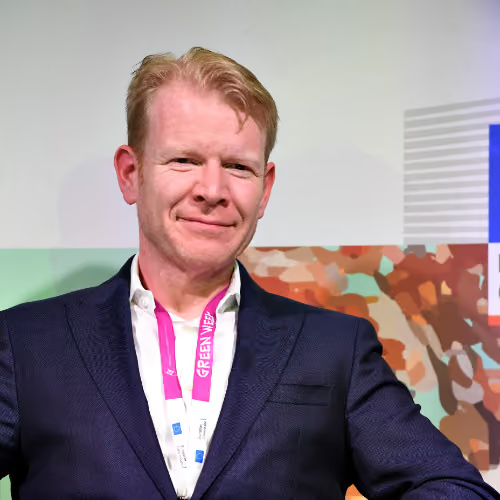
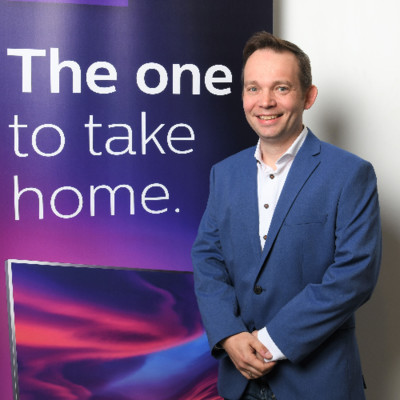
Twintig jaar ervaring binnen wereldwijde technologie-, industriële en kanaalorganisaties — HP, Intel, Samsung, Kantar, DS Smith, Dolby, Tech Data. Van wereldwijde ondernemingen tot groeiende teams waar afstemming direct invloed heeft op de omzet.
Ik heb zelf verkoopquota gehaald, een productcategorie beheerd en als CMO verantwoording afgelegd aan een raad van bestuur. Gebrekkige afstemming ziet er vanuit elk van die rollen anders uit. Dat is precies waar het om draait.


Recognized by Intel for outstanding performance
Best-in-Class Sales Enablement Interactivity Award (Showpad, EMEA)
Hetzelfde systeem, verschillende niveaus van eigenaarschap. De aanpak hangt af van hoeveel van het probleem je team al zelf in handen heeft.
Wanneer het team de uitvoering in handen heeft en een frisse blik op het systeem nodig heeft
Wanneer een specifiek commercieel probleem gericht senior eigenaarschap en een duidelijk eindpunt vereist.
Wanneer je leidinggevend inzicht nodig hebt zonder een voltijdse aanwerving.
Wanneer een CMO of CRO vertrekt en het momentum niet kan wachten op de zoektocht naar een opvolger.
Wanneer het groeisysteem elke dag een vaste eigenaar nodig heeft, op lange termijn.
Niet zeker wat past?
De Clarity Call geeft meestal binnen dertig minuten antwoord.


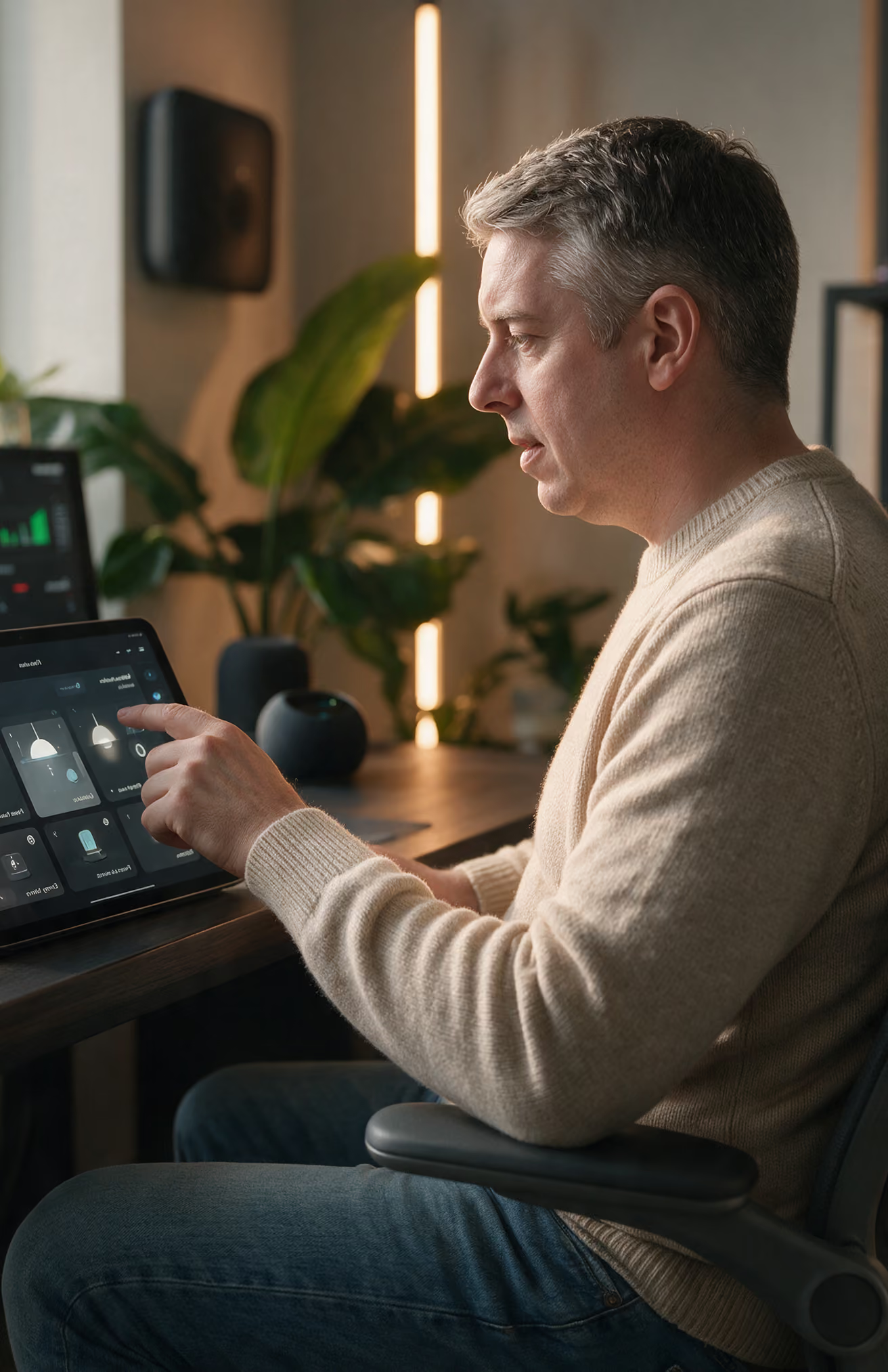
Ik heb een geïntegreerde omgeving voor huisautomatisering gebouwd die verlichting, audio, aanwezigheidsdetectie, energie en andere verbonden systemen omvat, en vervolgens een boek geschreven waarin ik documenteer hoe het werkt en hoe je er zelf een bouwt.
Enkele van de complexere mogelijkheden — een engine voor de status van het huis, contextafhankelijke verlichting en 'follow-me' audio — werden ontwikkeld met behulp van AI om de automatiseringslogica te ontwerpen, te schrijven en te verfijnen.

In toenemende mate betekent dit ook begrijpen waar AI en automatisering frictie uit het commerciële systeem kunnen wegnemen — zodra het onderliggende proces duidelijk is.
When the need is purely extra capacity: more campaigns, more leads, more content, with no question about direction. A good agency or an additional hire will serve you better.
I’m also not the right fit when leadership wants the problem solved without being part of it. Alignment work touches priorities, ownership and decisions at the top. It only holds when the leadership team is willing to engage with what it finds.
If neither applies, there’s a good chance we should talk. Book a 30-minute call and we’ll find out quickly.
I’m based in Puurs, between Antwerp and Brussels. Most of my career has been spent in European and global roles, including aligning one commercial story across more than 27 countries at DS Smith.
Engagements usually combine on-site sessions, where leadership alignment benefits from being in the same room, with remote work in between. Geography rarely limits the work. Misalignment looks remarkably similar from one market to the next.

What matters more than location is access to the people who make the commercial decisions.

It’s a fair question. The difference is that I didn’t observe those functions from the outside. I carried a quota, owned a product category, led marketing across Europe and sat in the CMO and CRO seats answering to a board.
That matters because growth rarely breaks inside one function. It breaks in the space between them, where each team makes sensible decisions that no longer add up. Seeing that space clearly takes having worked on every side of it.
Specialists optimise the parts. My job is to make the parts work together.
It’s deliberate. Some organisations don’t need someone to diagnose and step back. They need one person to own the growth system every day, for the long run.
The methods are the same either way: the Matrix, the Flywheel and the Staircase work whether I’m advising from the outside or accountable from the inside. What changes is the level of ownership.
The right model is the one that matches the problem, not the one that suits my business.
It comes down to how much of the problem already sits inside your team. If your people own execution and need a second read on the system, advisory is usually enough. If there’s a defined commercial problem with a clear end point, a project fits.
Fractional and interim make sense when the gap is leadership itself: a seat that needs senior judgement part of the week, or a CMO or CRO role that’s open while momentum can’t wait for the search.
You don’t need to decide upfront. The Clarity Call usually makes the right route obvious within thirty minutes.
Increasingly, but always second. AI and automation can remove a great deal of friction from a commercial system: routing insight, preparing sales material, connecting data between teams.
The catch is that automation amplifies whatever process sits underneath it. Automate a fragmented system and you get fragmentation at speed. That’s why I start with clarity on how the system should work, then look at where AI can carry the load. It’s the same approach I used to design my own home automation system.
Clear the logic first. Then let the technology do the heavy lifting.
Een korte diagnose gebaseerd op de Alignment-matrix. Het wijst aan waar de wrijving zich waarschijnlijk bevindt — geen definitief antwoord.